
LG CNS CEO courts US AI PhDs
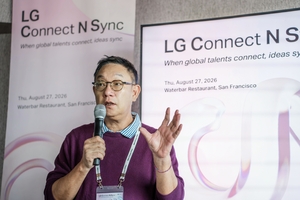
LG CNS CEO Hyun Shin-kyun personally led campus recruitment events at top US universities, a rare move for a Korean IT services firm. The 'LG Connect N Sync' sessions targeted about 30 graduate students from Stanford, UC Berkeley, and other leading institutions, focusing on AI, data science, and engineering disciplines. The company aims to strengthen its AI transformation and robotics capabilities, planning to hire both in Korea and the US, and expand its Silicon Valley AI & Robotics Lab. This signals a strategic shift where top talent acquisition is treated as a core business priority, not just an HR function. Key signal: LG CNS CEO personally visited top US universities to recruit ~30 master's and doctoral students in AI and engineering fields. For hiring leaders, this matters because for CHROs and GCC leaders, this underscores the intensifying global competition for AI talent. When a CEO personally courts PhD students, it signals that AI skills are a board-level priority. Indian firms and GCCs must recognize that top-tier AI talent is a global commodity, and they need to differentiate their employer brand and value proposition to attract and retain such specialists. The move also highlights the importance of building long-term pipelines with universities, not just transactional hiring. Teksands view: If a Korean IT services giant is flying its CEO to Stanford and Berkeley, the AI talent war is officially global. Indian IT services and GCCs can't rely on cost advantage alone; they need to invest in employer branding, research partnerships, and leadership engagement to compete for elite AI talent. The focus on engineering disciplines beyond software is a reminder that AI transformation is about industrial applications, not just code. Expect more cross-border talent mobility and aggressive poaching in the AI domain.
Key fact
LG CNS CEO personally visited top US universities to recruit ~30 master's and doctoral students in AI and engineering fields.
Why it matters
For CHROs and GCC leaders, this underscores the intensifying global competition for AI talent. When a CEO personally courts PhD students, it signals that AI skills are a board-level priority. Indian firms and GCCs must recognize that top-tier AI talent is a global commodity, and they need to differentiate their employer brand and value proposition to attract and retain such specialists. The move also highlights the importance of building long-term pipelines with universities, not just transactional hiring.
The Teksands point of view
If a Korean IT services giant is flying its CEO to Stanford and Berkeley, the AI talent war is officially global. Indian IT services and GCCs can't rely on cost advantage alone; they need to invest in employer branding, research partnerships, and leadership engagement to compete for elite AI talent. The focus on engineering disciplines beyond software is a reminder that AI transformation is about industrial applications, not just code. Expect more cross-border talent mobility and aggressive poaching in the AI domain.
Got a tech role that's refusing to close?
Send us the JD. We'll tell you whether the problem is talent supply, compensation, location, process - or the JD itself.