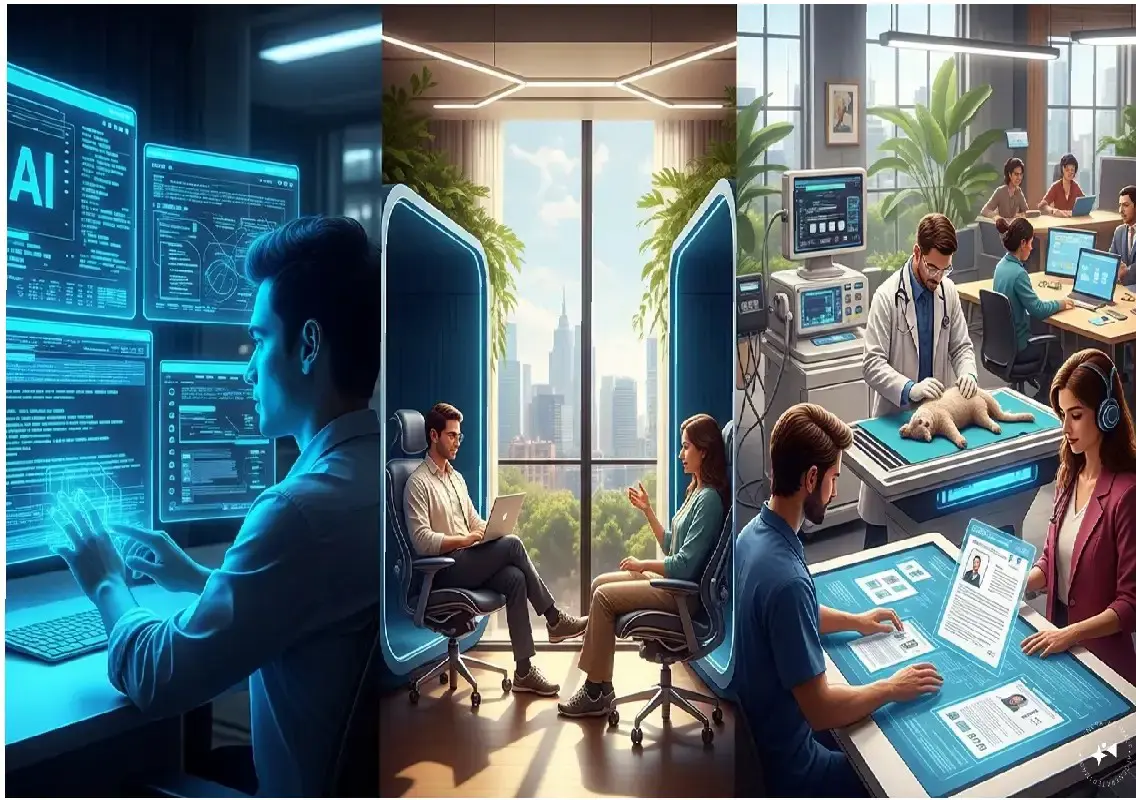

Gates: AI job disruption in a decade, not generations

Bill Gates has called for urgent national and international frameworks to manage AI's societal impact, warning that the technology could either be a great equalizer or deepen inequality. He highlights employment as a major risk, with AI affecting both white- and blue-collar jobs across law, customer service, medicine, software, and manufacturing. Unlike past technological shifts that took generations, Gates expects AI disruption to unfold within about a decade, making entry- and mid-level positions particularly vulnerable. He proposes new institutions, 'Human Reserved' roles, and taxes on AI tokens and robots to fund retraining and safety nets. Key signal: Bill Gates warns AI-driven job disruption will occur over roughly a decade, affecting entry- and mid-level roles across sectors. For hiring leaders, this matters because for CHROs and TA leaders, Gates' timeline of a decade for AI disruption is a strategic signal. It suggests that workforce planning must accelerate, with a focus on reskilling and redeploying talent in entry- and mid-level roles. The emphasis on 'Human Reserved' roles and AI taxes could influence policy and corporate strategy, impacting hiring models and cost structures. GCCs and IT services firms should anticipate shifts in demand for AI skills and prepare for potential regulatory changes that could affect talent acquisition and retention. Teksands view: Gates is stating the obvious, but the timeline is the kicker: a decade, not generations. That means the window for workforce planning is now. Companies that treat AI as a tech upgrade rather than a workforce transformation will be caught flat-footed. The 'Human Reserved' idea is interesting but vague; the real action is in reskilling and redefining roles. For hiring leaders, this is a call to build AI literacy across the organization, not just in tech teams. The tax proposal is a long shot, but the conversation around it signals that AI's impact on jobs is becoming a board-level issue.
Key fact
Bill Gates warns AI-driven job disruption will occur over roughly a decade, affecting entry- and mid-level roles across sectors.
Why it matters
For CHROs and TA leaders, Gates' timeline of a decade for AI disruption is a strategic signal. It suggests that workforce planning must accelerate, with a focus on reskilling and redeploying talent in entry- and mid-level roles. The emphasis on 'Human Reserved' roles and AI taxes could influence policy and corporate strategy, impacting hiring models and cost structures. GCCs and IT services firms should anticipate shifts in demand for AI skills and prepare for potential regulatory changes that could affect talent acquisition and retention.
The Teksands point of view
Gates is stating the obvious, but the timeline is the kicker: a decade, not generations. That means the window for workforce planning is now. Companies that treat AI as a tech upgrade rather than a workforce transformation will be caught flat-footed. The 'Human Reserved' idea is interesting but vague; the real action is in reskilling and redefining roles. For hiring leaders, this is a call to build AI literacy across the organization, not just in tech teams. The tax proposal is a long shot, but the conversation around it signals that AI's impact on jobs is becoming a board-level issue.
Got a tech role that's refusing to close?
Send us the JD. We'll tell you whether the problem is talent supply, compensation, location, process - or the JD itself.