

GCCs hit a talent wall on advanced skills
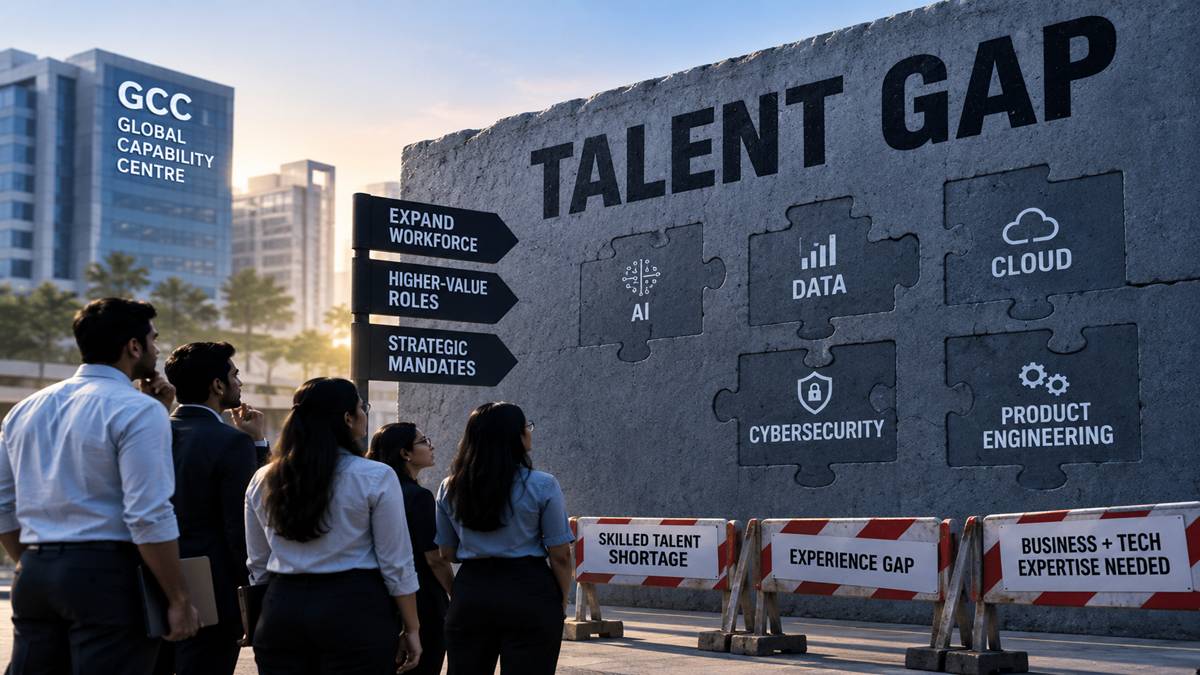
India's Global Capability Centres are hitting a talent wall. Demand for advanced skills, particularly AI engineering, data, cloud and cybersecurity, is outpacing the supply of candidates who can actually do the work at the depth GCCs now need. The story lands as GCCs have become the country's most aggressive hirers of senior technology talent, competing directly with product firms and IT services for the same narrow pool. The signal is not that GCCs are slowing down. It is that the constraint has shifted from budget and mandates to people. That changes how GCCs hire, where they hire, and what they are willing to pay for proven specialist capability. Key signal: India's GCCs are running into a supply wall for advanced skills even as demand for AI, data and cloud talent keeps climbing. For hiring leaders, this matters because for CHROs and GCC leaders, the bottleneck is no longer headcount approval. It is the availability of engineers who can operate at the level GCCs now demand. That pushes up compensation for proven AI, data and platform talent, stretches time-to-hire, and makes offer dropouts more likely when candidates hold multiple options. It also strengthens the case for building in Tier-2 cities, running internal reskilling at scale, and hiring on demonstrated skills rather than pedigree. Leaders who treat this as a sourcing problem will lose to those who treat it as a capability-building problem. Teksands view: The GCC hiring story has been about scale and mandates. The real constraint now is depth of skill. Companies that keep competing on brand and CTC will keep losing candidates to faster movers. The advantage goes to firms that build capability internally, hire on demonstrated skills, and move into Tier-2 talent pools before everyone else does.
Key fact
India's GCCs are running into a supply wall for advanced skills even as demand for AI, data and cloud talent keeps climbing.
Why it matters
For CHROs and GCC leaders, the bottleneck is no longer headcount approval. It is the availability of engineers who can operate at the level GCCs now demand. That pushes up compensation for proven AI, data and platform talent, stretches time-to-hire, and makes offer dropouts more likely when candidates hold multiple options. It also strengthens the case for building in Tier-2 cities, running internal reskilling at scale, and hiring on demonstrated skills rather than pedigree. Leaders who treat this as a sourcing problem will lose to those who treat it as a capability-building problem.
The Teksands point of view
The GCC hiring story has been about scale and mandates. The real constraint now is depth of skill. Companies that keep competing on brand and CTC will keep losing candidates to faster movers. The advantage goes to firms that build capability internally, hire on demonstrated skills, and move into Tier-2 talent pools before everyone else does.
Got a tech role that's refusing to close?
Send us the JD. We'll tell you whether the problem is talent supply, compensation, location, process - or the JD itself.